相关推荐
Tracker + 随机推荐
[Kekkan] 完璧圣女 / Kanpekiseijo (BDRip 1080p AV1 简繁官字) / 完璧すぎて可爱げがないと婚约破弃された圣女は隣国に売られる / Kanpekisugite Kawaige ga Nai to Konyaku Haki sareta Seijo wa Ringoku ni Urareru
标签
下载链接
磁力链接(Ⅰ类型地址):
磁力链接(Ⅱ类型地址):
种子文件:
暂无文件信息
📝 使用说明
More than Kanpeki:
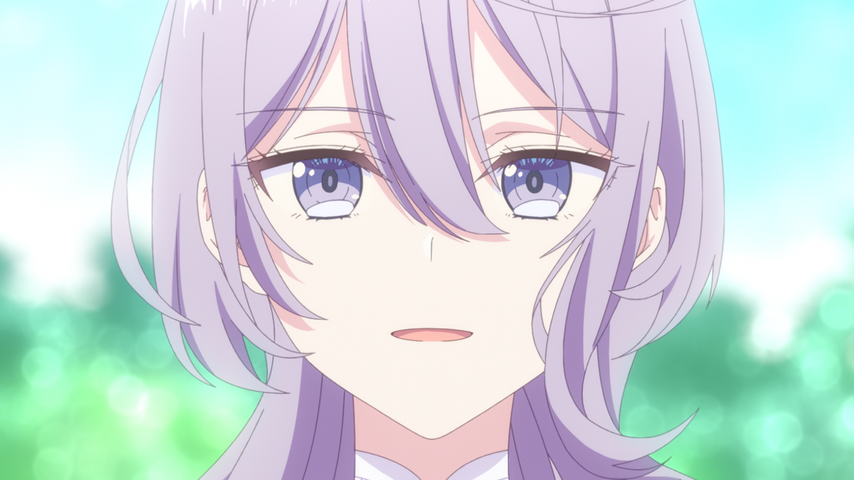
This is a high effort filtering and encoding for Kanpekiseijo.
slow.pics compare: https://slow.pics/c/RZNAlRmF
The BD is lowpassed, and has a thick layer of authoring noise, which results in distortion and sometimes heavy blocking surrounding sharp character lineart. The CR WEB source has much better character lineart. On the other hand, in background, the BD and CR WEB source is about equal. In some scenes, BD has more details, while in other some scenes, CR WEB has more details.
We first use anime-segmentation model via vs-mlrt to separarte the character and the background. After that, we delowpass the BD following 12-tap blackmanminlobe with [1/1.250, 1/1.425] fh and [1/1.250, 1/1.375] fv.
During the delowpass, we vsdenoise.frequency_merge the BD and WEB. For characters, we take the high frequency information exclusively from WEB to avoid picking up the blocking and dirty mosquito noise in the BD. For background, we add the high frequency information from both BD and manged WEB together.
This anime is almost impossible to denoise using typical method. In some scenes, there are multiple layers of texture on top of each other with each layer having different motion. There are also a lot of scenes that fade to black or white.
For this reason, we only use a very conservative dctf.DCTFilter and DFTTest to decheckerboard CR prior to delowpass, and we don't perform any denoise on BD.
As usual, prior to denoise and delowpass, we perform Lehmer merge on the OP. But to avoid strengthening the checkerboard in WEB, and to limit the noise in BD, we only perform Lehmer merge using a limited number of episodes.
Lineartwise, this anime doesn't have much aliasing, but it has quite strong halo, and it's not descalable.
We skip AA, and we apply a medium strength dehalo via vsdehalo.dehalo_alpha with mask via vsdehalo.fine_dehalo. To prevent damaging the texture, we only apply dehalo on characters, and we also isolate the noise via DFTTest prior to dehalo.
After dehalo, we apply a very light deband on characters using placebo_deband via vsdeband.pfdeband, and then regrain using a layer of Perlin noise on characters to smooth out some of the remaining CR checkerboard.
As previously explained, this anime can't be denoised without losing a lot of the texture. So instead we go with the high DLF strategy discovered by Itachi Uchiha and spreaded to my ears by Delie. This method don't hate regrain either, and in fact the regrain seems to have been helping the encoder ignoring the mosquito noise in the source. Although on the other hand, this method isn't very good at producing perfect lineart.
We use 5fish/SVT-AV1-PSY Apr 28 version with --preset 2 --crf 24.20 --lineart-psy-bias 5 --texture-psy-bias 4 --noise-level-thr 21000 --satd-bias 0.50 --dlf-bias-max-dlf 24,2 --dlf-bias-min-dlf 16,0 --dlf-sharpness 7 --texture-cdef-bias-max-cdef 0,0,0,0 for the encode.
Thanks to all the people creating the tools, plugins and vsfunc’s that make this possible, and thanks to everyone in the community for teaching me, pointing out issues, and giving me advice.
If you’re interested in AV1 encoding for anime, you are welcome to join AV1 weeb edition at https://discord.gg/83dRFDFDp7.
You are welcome to do anything with this encode, including remuxing and republishing it. However, we would ask you to leave a credit to Kekkan if you can.
We recommend using MPV to playback our releases. Thank you for seeding after download.
暂无评论
成为第一个评论的人吧